
|
||||
| What is the 'right' type of resistance? Ibrahim Shikaki |
|
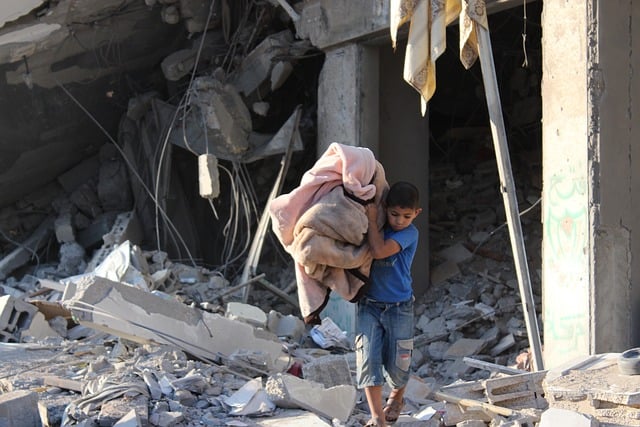
Al Jazeera Media coverage of the Palestinian resistance movement is shaped to fit the Western narrative of nonviolence. Ibrahim Shikaki Over the past few months, several international media outlets have published articles fixating on the so-called "new" Palestinian nonviolent movement. Two fallacies have accompanied such reporting and analysis. First the use of the term "nonviolent" and its connotations; and second, the narrative surrounding the movement. The latest articles in the series are Al Jazeera English's "Green shoots emerge at Qalandia checkpoint", the Economist blog's "Here comes your non-violent resistance", and Time magazine's "Palestinian Border Protests: The Arab Spring model for confronting Israel". In Arabic, Palestinians do not distinguish between violent and non-violent resistance, but rather between armed resistance and popular resistance. The Palestinian people and political factions have relied on both forms, as well as others, throughout the past century. In fact, and unlike other colonial schemes in South Africa or Algeria, the goal of the Zionist colonial plan is to uproot and ethnically cleanse Palestine of its indigenous people - hence, by simply existing and standing firm on their land, Palestinians are actually resisting. On the one hand, there are attempts to impose the idea that nonviolence is the only form of resistance "allowed", thus falsely implying that all other forms of resistance are violent, immoral or illegal. On the other hand, a general consensus views resistance as a legitimate right of the Palestinian people, as it is the right of any people living under oppression, colonisation and foreign occupation. According to this view, popular resistance is perceived to be more effective than armed resistance at this stage of struggle. Because of the discrepancy between these two statements, the term "violent" has been extended to reach the throwing of stones at Israeli tanks or heavily armoured military checkpoints. Many different forms of popular resistance characterised the first Intifada, including children jumping from house to house during curfew hours to provide sugar and flour to neighbors; youth playing soccer on the edges of streets so as to warn graffiti writers when a military vehicle was passing through; volunteer work; commercial strikes and boycotts; as well as mass protests that included throwing stones at army outposts and military vehicles. Stones aimed at Israeli tanks or other armed vehicles were a means for the unarmed indigenous people of Palestine to demonstrate their refusal of occupation and oppression. Youth, women, the elderly and all sectors of society participated in this form of resistance. Stones could be violent, however, when used systematically by Israeli soldiers to smash Palestinians' limbs, as part of a policy ordered by Yitzhak Rabin, then Israeli minister of defence, to "break their bones". The Knesset refused to even investigate Rabin's order, and he was never been held accountable. The overwhelming growth in the BDS movement, met with little to no coverage of its successes by most mainstream media outlets can only be an indicator of the hypocrisy of their coverage of Palestinian resistance: only shedding light on forms of resistance they categorise as relevant - or, dare I say, worthy. The articles present the current so-called nonviolent movement as the "correct" way to resist, where Palestinians' choice of the correct resistance method will demonstrate our worthiness to be given our rights and independence. Implying that our rights have not been fulfilled because we have not demonstrated our worthiness of them relieves Israel of the need to uphold international law and grant us our basic rights, and also excuses Western hegemonies for awarding Israel full impunity to carry on with its violations and crimes. It must be made clear that our right to return and to end Israel's occupation, colonisation and apartheid are guaranteed by international conventions, and their fulfillment is an obligation - irrespective of the methods of resistance we choose to follow, or any other factors, for that matter. In addition, suggesting that popular protest is a new phenomenon in Palestine where "the real Martin Luther King-style nonviolent Palestinian protestors have arrived" is a shameful distortion of facts by media outlets. Resistance in Palestine, and particularly popular resistance, is more than a century old, where the overwhelming majority of resistance to Zionist colonisation, British rule, and later Israel's oppression has taken the form of civil, popular uprisings. Palestinian popular resistance can only be Palestinian-style! Journalists need to abandon lazy journalism, and expand their memory-span to more than ten years. It was them, after all, who analysed and focused on the "international western power structure", a structure that has only developed in influence and tools since the 50s and 60s. And while having the utmost respect for the satyagraha of Gandhi and MLK's battle in the civil rights movement, Palestinians need not look far to find role models within Palestine's history and heritage for alternative means of resistance. Democracy is only acceptable if the outcomes are what they have chosen - only neoliberal economic policies that please the real axis of evil (World Bank, International Monetary Fund, and the World Trade Organisation) are allowed in developing countries; and queer communities around the world must follow Western mechanisms of pride and advocacy. Though these are all apparently different issues, the same paradigm applies to all of them: Western hegemonic ideologies and forms of action are used to measure the legitimacy of others that are suggested around the world. Israel has the world in its hands, not because it is threatening them by force or military power, but because it controls the discourse. That is why when a group of Israelis harass Palestinians and plot to assassinate a head of mosque they are referred to in the media as "mobsters and gangs", or mentally unstable such as Baruch Goldstein - never as "terrorists" or "extremists". This is similar to the indirect control processes applied throughout hundreds of years of colonialism, the same trope has been used to reinforce the coloniser's power: the primitive barbarians vs the enlightened people. A recent ad campaign in the US demonstrates this, it reads: "In any war between the civilised man and the savage, support the civilised man. Support Israel. Defeat Jihad." The idea that there is only one "right" way of resistance or that armed and popular resistance are contradictory is false (or at least lacks historical evidence) if a simple review of colonial history is applied (Algeria, South Africa, etc). These statements show Palestinian protesters to be apologetic for the symbolic gesture of throwing stones - and this is at the expense of questioning the very presence of Israel's occupation forces. Sixty years ago, forty years ago, in the first and second Intifadas, and in the recent "peaceful" marches, the Israeli response was always violence and bloodshed - young men and women have been shot with live and rubber-coated ammunition, beaten with clubs and suffocated by toxic gas. It would be naive to expect the Israeli response to differ in the future, nor would it be required to resist nonviolently to show the ugly face of Israeli occupation - since it is demonstrated in every single action of Palestinian daily life. Regardless of our strategy, Israel will continue to deny our existence as a nation, will not admit the ethnic cleansing it committed in 1948, and will continue its suppressive measures of oppression against Palestinians everywhere. It is our role to focus on our similarities and points of agreement about resistance rather than our differences. The Palestinian people must mobilise around resisting Israeli apartheid through a program that is generated from a discussion within a truly representative body - which is only possible through direct elections for a new Palestinian National Council (PNC). Ibrahim Shikaki is a UC Berkeley graduate. He works as an associate researcher at the Palestine Economic Research Institute (MAS) and is a Ramallah-based youth organiser.
Fonte: http://english.aljazeera.net/indepth/opinion/2011/06/201162895553754742.html |